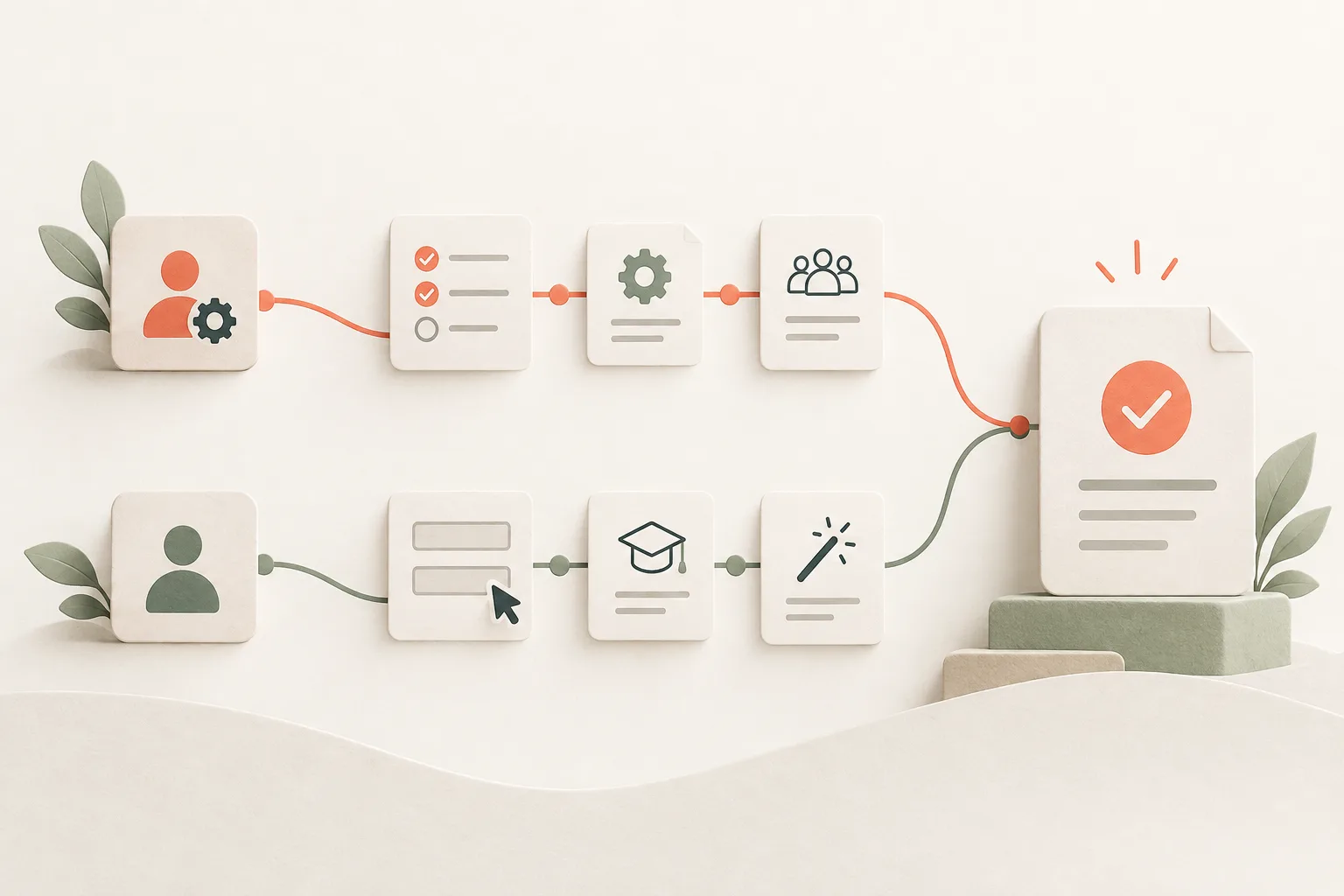
A CRM example. Each person continues once the data and access are ready, without repeating a colleague’s setup.
- 1↓
The admin prepares the data
Imports contacts and checks the result.
- 2↓
The product checks readiness
Checks both the data and the invited colleague’s permissions.
- 3↓
The rep does their first task
Opens a customer, reads the history, and plans the next contact.
- 4
The lead sees actual work
Checks whether the team’s records support their management decisions.
Who is going through onboarding?
Imagine a team moving into a CRM. The sales lead chose the software, an admin imported the customer list, and a rep accepted an invitation. The rep signs in to a welcome tour: “Create a workspace,” “Import your contacts,” “Invite your team.” Their colleagues have already done all of that. They need to find the customer they are due to call today.
The tour asks the rep to repeat account setup when they need access to the customer list their admin has already imported.
For B2B SaaS, it helps to design the team’s setup as a whole. The person who starts a trial may never connect an integration or use the resulting report. A single route can assign people tasks that belong to somebody else. Where those tasks depend on each other, the product also needs to help the next person take over.
The difficult step may sit between two people
In this example, the admin handles data and access. They can check an import, but they do not know how the rep plans calls. The rep knows the job but cannot fix permissions. Both can get stuck even when each individual screen makes sense.
Try writing the handoff as one sentence: “Once the contacts are imported and access is granted, the rep can open their customer list.” That sentence gives you conditions to check. An event saying the admin visited Settings confirms neither of them.
It also gives you something useful to say in the interface: “Your contacts are ready. An admin still needs to give you access.” Provide a way to request that access or contact the person responsible. Asking the rep to import another file would add confusion.
The handoff works in the other direction too. Once setup is finished, the invited colleague needs to know they can continue. Otherwise the admin has done the work while the rep is still waiting. When the rep returns, show that access is ready and offer a link to their customer list.
| Person | First job | What they need |
|---|---|---|
| Admin | Prepare the customer list for colleagues | A data source and setup permissions |
| Sales rep | Find a customer and plan the next contact | Imported contacts and access to them |
| Sales lead | See the state of the team’s work | Actual records from the team, not a sample dataset |
Choose a small task that someone can finish
“Teach the rep our CRM” leaves you with a sprawling brief. It is hard to test: someone could visit every section and still not know where to begin tomorrow morning. “Find a customer, read their history, and schedule the next call” gives you an actual job. You can identify the data and actions it requires.
Now you can have a useful argument about the steps. Does scheduling a call require a profile photo? Probably not. Does it require checking access to customer records? Yes. Removing every step that adds another screen would be a poor way to simplify setup.
Leave optional settings available for later. Explain things alongside the work when a specific question comes up. If people are searching for “Schedule a call” while the button says “Create activity,” start with the label.
Sample data can help while the company’s own list is being prepared. Label it clearly and make the move to real records easy to find. A rep should not discover, after half an hour of work, that the customers they have been planning to call are fictional.
Test the person who arrives second
It is convenient to test onboarding in an empty account as its owner. You have every permission and can create everything from scratch. That convenience is also why the test misses problems your invited users will encounter.
Invite another person into a prepared test account. Give them an ordinary task without naming the buttons they should press. Watch whether they can find their colleagues’ data, tell what is already set up, and understand what they need to do. Then interrupt the task and return. They should be able to continue without repeating the introduction.
Also try an invitation that arrives before data or access is ready. Does the screen explain the delay? Can the person tell who will resolve it? Does the screen change when the issue is resolved? Those checks tell you more than another flawless run as the owner.
Start with this one handoff, from the admin to the first invited colleague. If that is where the person gets stuck, fixing it lets them begin their job. Build the rest of their introduction around the tasks that come next.